ĐỐI TÁC PHÁT TRIỂN NÔNG NGHIỆP BỀN VỮNG VIỆT NAM (PSAV)


- Giới thiệu
- Nhóm Công tác
- Thông tin về FTA
- Tài Liệu
 Điều lệ hoạt động
Fruit and veg exports target 10B USD
Fruit and vegetable exports have shown strong growth in the new year. The Import-Export Department under the Ministry of Industry and Trade reported that in the first month of 2026, exports reached USD 644 million, up 73% from January 2025.
In February, due to the long Lunar New Year holiday, fruit and vegetable exports reached only USD 351 million, nearly half of January’s figure but still up nearly 12% compared to the same period in 2025. As a result, exports in the first two months of the year still grew by 45%, with total turnover reaching USD 996 million.
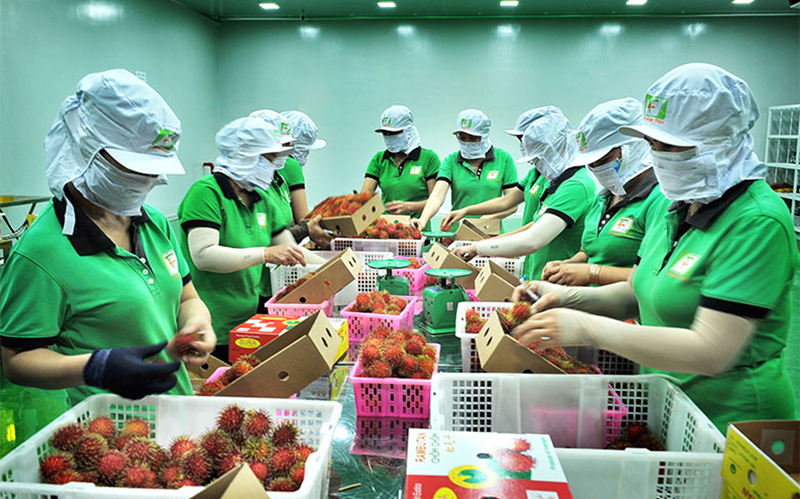
Fruit and vegetable exports have grown strongly since the beginning of 2026
With strong growth in the first two months, the fruit and vegetable sector is confident about reaching the USD 10 billion target this year, even as global trade faces uncertainties due to the Middle East conflict.
In contrast to the beginning of 2025, fruit and vegetable exports to China in the early months of this year were “smooth sailing”. In the first two months, exports to China reached USD 538 million, up 76.2% year-on-year, far exceeding the sector’s overall export growth.
According to the China Chamber of Commerce for Import and Export of Foodstuffs, Native Produce and Animal By-products (CFNA), this country spent USD 18.94 billion in 2025 to import 9.032 million tons of fruit, up 6.7% in value and 17.5% in volume compared to 2024. Over the past decade, China’s fruit imports have grown annually by 15.2% in value and 9.7% in volume.
The rise of Vietnamese fruit in the Chinese market has also played an important role in boosting exports to this market. Previously, Viet Nam often ranked behind countries such as Thailand and Chile among the largest fruit suppliers to China. In 2025, Viet Nam surpassed Chile to become China’s second-largest fruit supplier.
Among the eight fruits with the largest import turnover in China in 2025, Viet Nam was the leading supplier in four categories: durian (second in value after Thailand but first in volume), bananas (second), young coconuts (third), and longan (third).
Rising demand across many markets, improving quality of Vietnamese produce, the approval of more fruits for official export to major markets, and market expansion through free trade agreements are key factors supporting the sector’s goal of reaching USD 10 billion in exports this year.
“The increasingly complete North-South expressway system has significantly shortened the time needed to transport goods to the northern border. This not only extends preservation time but also shortens the turnaround time of refrigerated containers, thereby increasing the capacity to export Vietnamese fruits and vegetables to China,” said Dang Phuc Nguyen, General Secretary of the Viet Nam Fruit and Vegetable Association (Vinafruit).
Opportunities from the Middle East conflict
As with other major agricultural export sectors, the Middle East conflict has affected Viet Nam’s fruit and vegetable exports, particularly to Middle Eastern markets and to destinations where goods typically pass through the Red Sea and the Suez Canal, such as the eastern United States and Europe.
However, the conflict is also opening up new prospects for Vietnamese fruits and vegetables. According to Dang Phuc Nguyen, the conflict has disrupted the flow of fruit shipments from the EU, the Americas, and the Middle East to Asian markets, such as China, South Korea, and Japan.
Data from CFNA shows that in 2025, among the top 10 fruit suppliers to China, three countries were from South America: Chile (the largest supplier of fresh cherries), Peru (the largest supplier of blueberries), and Ecuador (the third-largest supplier of bananas). The Middle East conflict has therefore significantly affected the supply of several key imported fruits to China.
Disruptions to fruit flows from Europe, the Americas, and the Middle East may lead Asian markets to increase imports from closer suppliers, including Viet Nam. This presents an opportunity for Viet Nam to expand fruit and vegetable exports to China, South Korea, and Japan.
Nevertheless, the Middle East conflict will continue to pose challenges to Viet Nam’s fruit and vegetable exports in 2026. Vinafruit has therefore proposed several recommendations to the Government and relevant ministries.
The association suggested that the Government provide direct support packages or reduce port fees and storage charges for fruit shipments that are delayed, stranded, or forced to change routes due to the conflict.
The Viet Nam Maritime Administration, under the Ministry of Construction, should work closely with foreign shipping lines to ensure transparency in war-risk surcharges and prevent opportunistic price hikes. The Ministry of Construction should also promote intermodal rail transport routes to Europe and alternative sea routes to reduce dependence on risky maritime chokepoints.
Vinafruit has also urged relevant ministries to accelerate negotiations on new export protocols with stable markets such as China (to expand the list of approved fresh fruits, such as pomelo, avocado, and lemon), as well as the United States and the EU, as a precaution against potential disruptions in the Middle East. For the EU market in particular, Viet Nam should push negotiations to remove the country from the list of non-cooperative tax jurisdictions.
Viet Nam should also maximize the benefits of the free trade agreement signed with Israel (VIFTA). Authorities should update guidance on rules of origin and provide special legal support for businesses trading with this market.