ĐỐI TÁC PHÁT TRIỂN NÔNG NGHIỆP BỀN VỮNG VIỆT NAM (PSAV)


- Giới thiệu
- Nhóm Công tác
- Thông tin về FTA
- Tài Liệu
 Điều lệ hoạt động
Developing Sustainable Potato Value Chains: A Catalyst for Higher Farmer Incomes and Green Transformation
Thanh Hoa, 20 October 2026 – The Dialogue on Sustainable Potato Value Chain Development was held in Thanh Hoa Province to promote linkages among businesses, cooperatives, and farmers, exchange experiences in applying advanced agricultural technologies, and identify solutions for developing an efficient, sustainable, and climate-resilient potato sector.
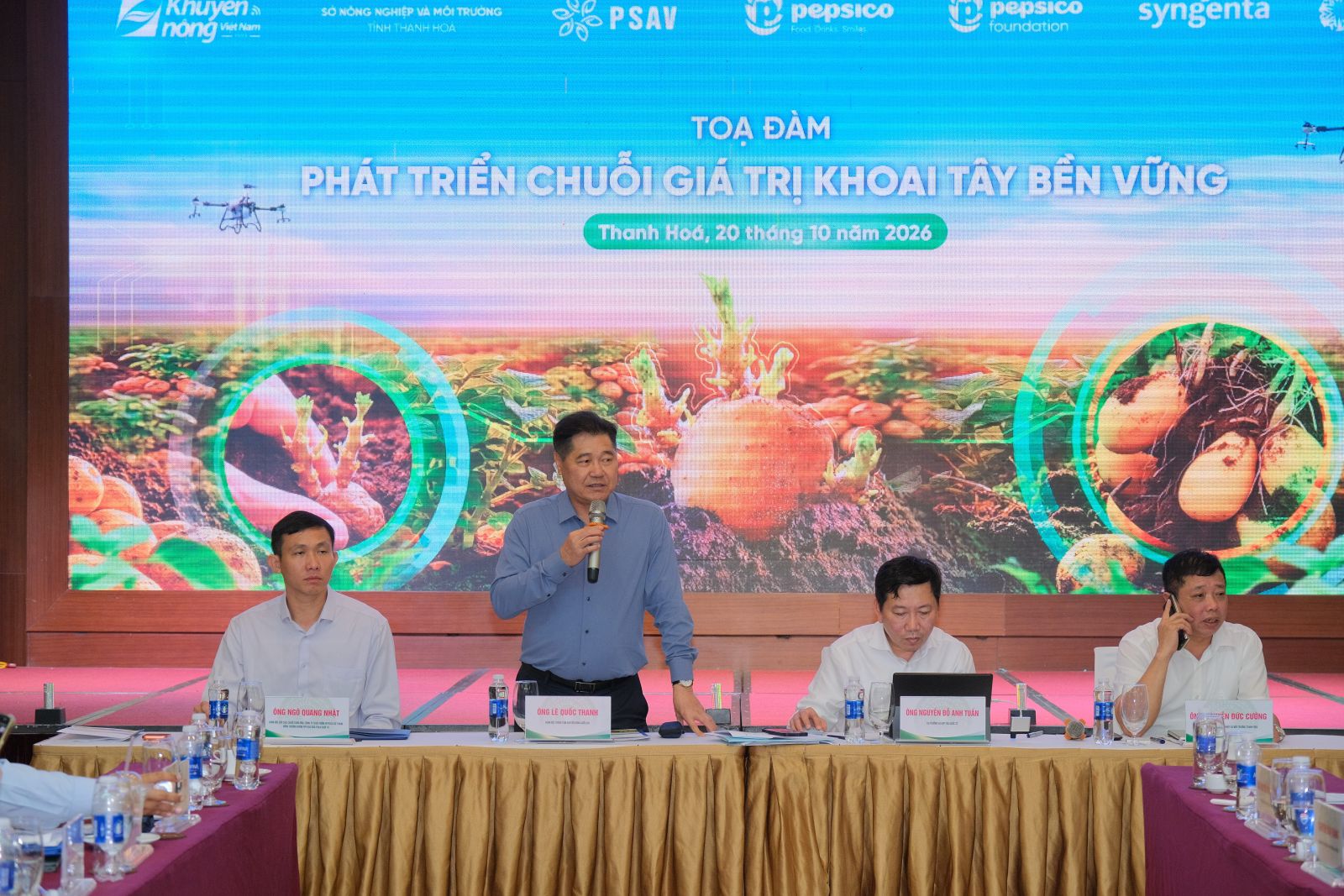
Co-chairs of the Dialogue
The event was co-organized by the National Agricultural Extension Center, the Thanh Hoa Department of Agriculture and Environment, the Secretariat of the Partnership for Sustainable Agriculture in Vietnam (PSAV), PepsiCo, and CARE in Vietnam, in conjunction with the launch of Phase 2 of the “Harvesting Potential” Project.
Potato Production: Unlocking Potential and Creating Greater Value
Potatoes are a promising crop that can improve the efficiency of winter crop production, diversify cropping systems, and increase farmers' incomes. However, sustainable sectoral development requires area expansion to go hand in hand with higher productivity, improved quality, more efficient resource use, and stronger market connectivity.
According to information shared at the dialogue, Thanh Hoa currently cultivates approximately 1,000–1,500 hectares of potatoes annually, with an average yield of 18–20 tonnes per hectare and total production estimated at 20,000–25,000 tonnes. The province also has approximately 2,500–3,000 hectares of land with potential for potato cultivation.
In recent years, commercial potato production areas have gradually emerged in several localities across the province. Notably, partnership models linking businesses, cooperatives, and farmers have helped provide seeds, agricultural inputs, technical assistance, and product procurement arrangements, creating greater confidence for farmers to invest in production.
Nevertheless, potato value chain development continues to face challenges, including inconsistent seed quality, fragmented production, limited mechanization, inadequate storage and processing infrastructure, and risks associated with extreme weather and pests. These challenges call for coordinated solutions ranging from production zone planning and standardized farming practices to stronger supply chain organization.
Technology Adoption and Value Chain Integration: Driving Economic Efficiency
At the dialogue, Mr. Nguyen Do Anh Tuan, Director General of the International Cooperation Department, Ministry of Agriculture and Environment, emphasized the need to shift from an agricultural production mindset towards an agricultural economic approach, with science and technology, innovation, and value chain integration serving as key development drivers.
In this context, public-private partnerships play an important role in connecting resources, transferring technical advances, and expanding farmers' access to technology, finance, and markets.
Sharing practical experiences, representatives of PepsiCo Vietnam noted that sustainable potato production models implemented by PepsiCo and Syngenta had helped increase average yields to 23–26 tonnes per hectare, with some farms reaching 58 tonnes per hectare. According to information shared, farmers' income increased from VND 27 million to VND 73 million per hectare through technology adoption, the use of high-quality varieties, and product off-take arrangements.
These results demonstrate the potential of combining technical solutions with value chain-based production models to improve not only yields but also economic returns per unit of land.
Beyond economic performance, sustainable potato production requires greater attention to soil health, efficient water and agricultural input management, reduced environmental impacts, and enhanced climate resilience. Selecting suitable varieties, applying advanced farming practices, and adopting science-based nutrient and pest management approaches will be essential to maintaining stable yields and product quality.
Building Inclusive Value Chains and Strengthening Farmers' Capacities
A key priority is to strengthen the role of cooperatives, promote business leadership, and ensure that farmers remain central stakeholders in value chain development.
To achieve this, efforts are needed to develop concentrated production areas, strengthen cooperative management capacities, expand contract farming arrangements, and improve procurement, storage, and processing systems in line with market requirements. At the same time, improving farmers' access to information, technical knowledge, finance, and production standards will enable smallholders to participate more actively and effectively in value chains.
Particular attention should be given to ensuring equal opportunities for women and vulnerable farming groups, so that value chain development generates not only economic value but also contributes to social development and improved community livelihoods.
Connecting with the Harvesting Potential Project: Towards Regenerative Agriculture and Sustainable Development
The discussions at the dialogue are closely aligned with the strategic direction of Phase 2 of the “Harvesting Potential” Project, which will be implemented during 2026–2028 in Dak Lak, Gia Lai, and Thanh Hoa provinces, with funding from the PepsiCo Foundation and in collaboration with PSAV, the National Agricultural Extension Center, and CARE in Vietnam.
The project aims to advance regenerative agriculture and inclusive value chains, with a target of directly supporting 13,600 farmers, including 8,160 women and 5,440 men, while reaching an additional 73,400 people indirectly.
Through capacity-building activities, the promotion of sustainable farming practices, stronger market linkages, and improved access to resources, the project is expected to contribute to higher incomes, stronger climate resilience, and expanded development opportunities for smallholder farming households.
As a platform connecting stakeholders through public-private partnerships, PSAV will continue working with partners to facilitate knowledge exchange, mobilize resources, and scale up sustainable production models.
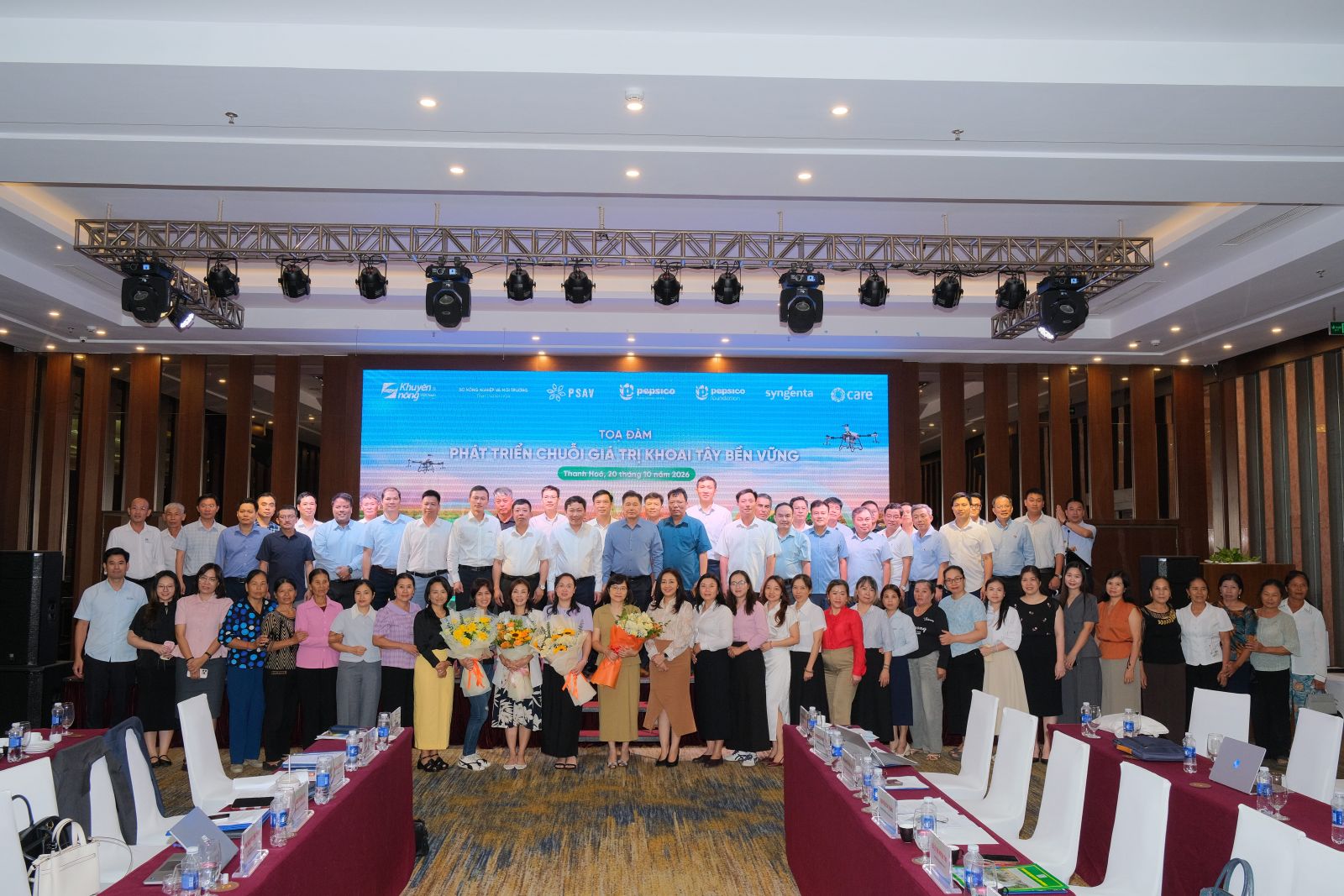
Delegates attending the Dialogue
Developing sustainable potato value chains not only creates opportunities to enhance the value of winter crops in Thanh Hoa but also contributes to green transformation, supporting a Vietnamese agricultural sector that is more productive, inclusive, and resilient to future challenges.