ĐỐI TÁC PHÁT TRIỂN NÔNG NGHIỆP BỀN VỮNG VIỆT NAM (PSAV)


- Giới thiệu
- Nhóm Công tác
- Thông tin về FTA
- Tài Liệu
 Điều lệ hoạt động
Identifying Gaps in the Development of a Circular Economy in the Shrimp Sector
The shrimp sector faces new requirements
On September 21, the Public-Private Partnership (PPP) Forum on Promoting the circular economy in the Shrimp sector in the Mekong Delta region was held in Can Tho City.
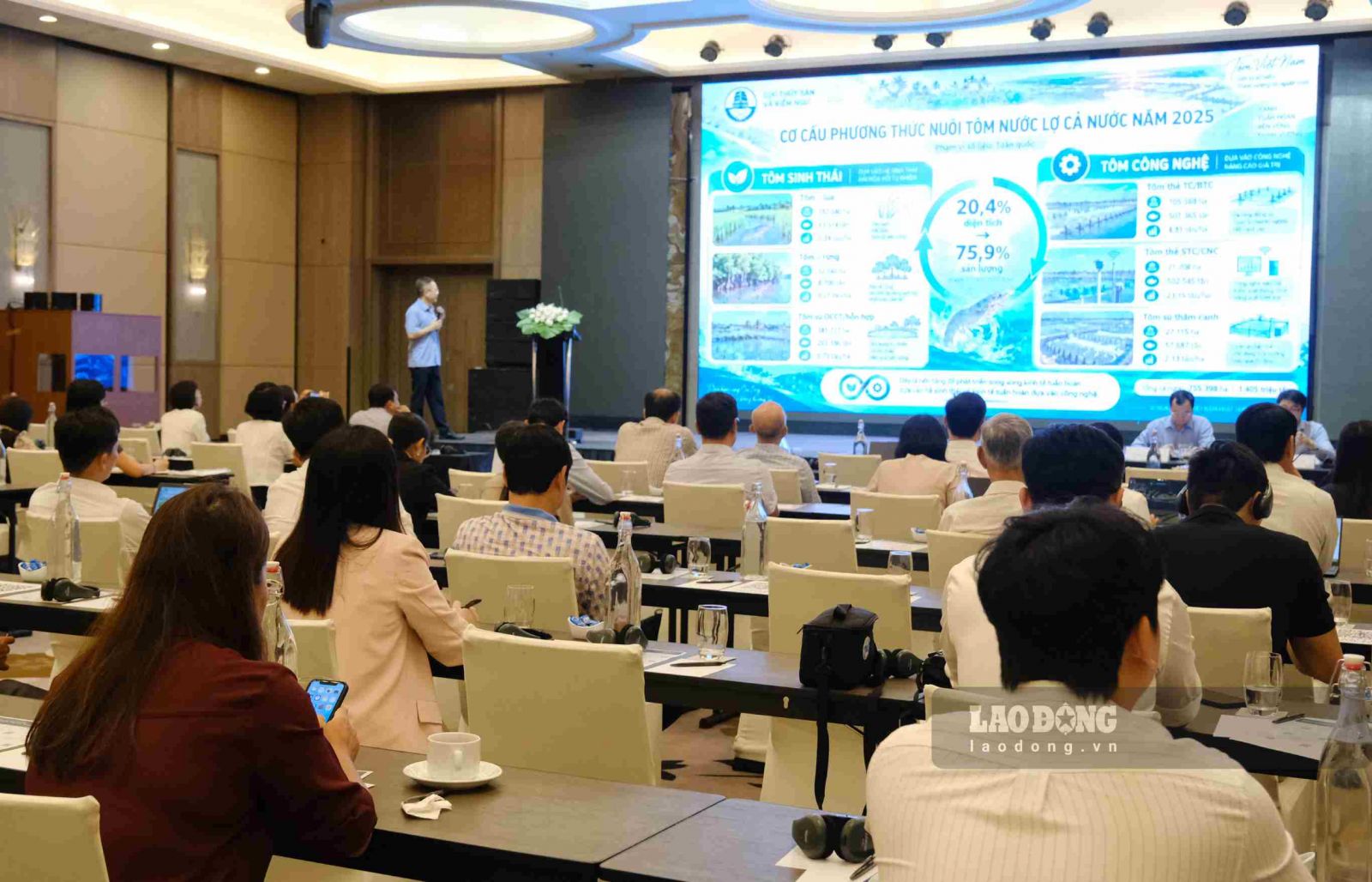
The Public-Private Partnership (PPP) Forum on Promoting the Circular Economy in the Shrimp Sector in the Mekong Delta was held in Can Tho City on September 21. Photo: My Ly
Speaking at the forum, Mr. Vu Duc Dam Quang, Deputy Director General of the International Cooperation Department, Ministry of Agriculture and Environment, emphasized that the shrimp sector plays an important role in production, exports and livelihoods, particularly in the Mekong Delta.
In 2025, Vietnam's shrimp exports reached approximately US$4.6 billion, accounting for around 35–45% of the country's total seafood export value.
However, the sector is facing a range of new challenges. Rising input costs, particularly for feed, energy and environmental treatment, are increasingly putting pressure on production efficiency. Climate change, saltwater intrusion, diseases and changing environmental conditions continue to directly affect shrimp farming activities.
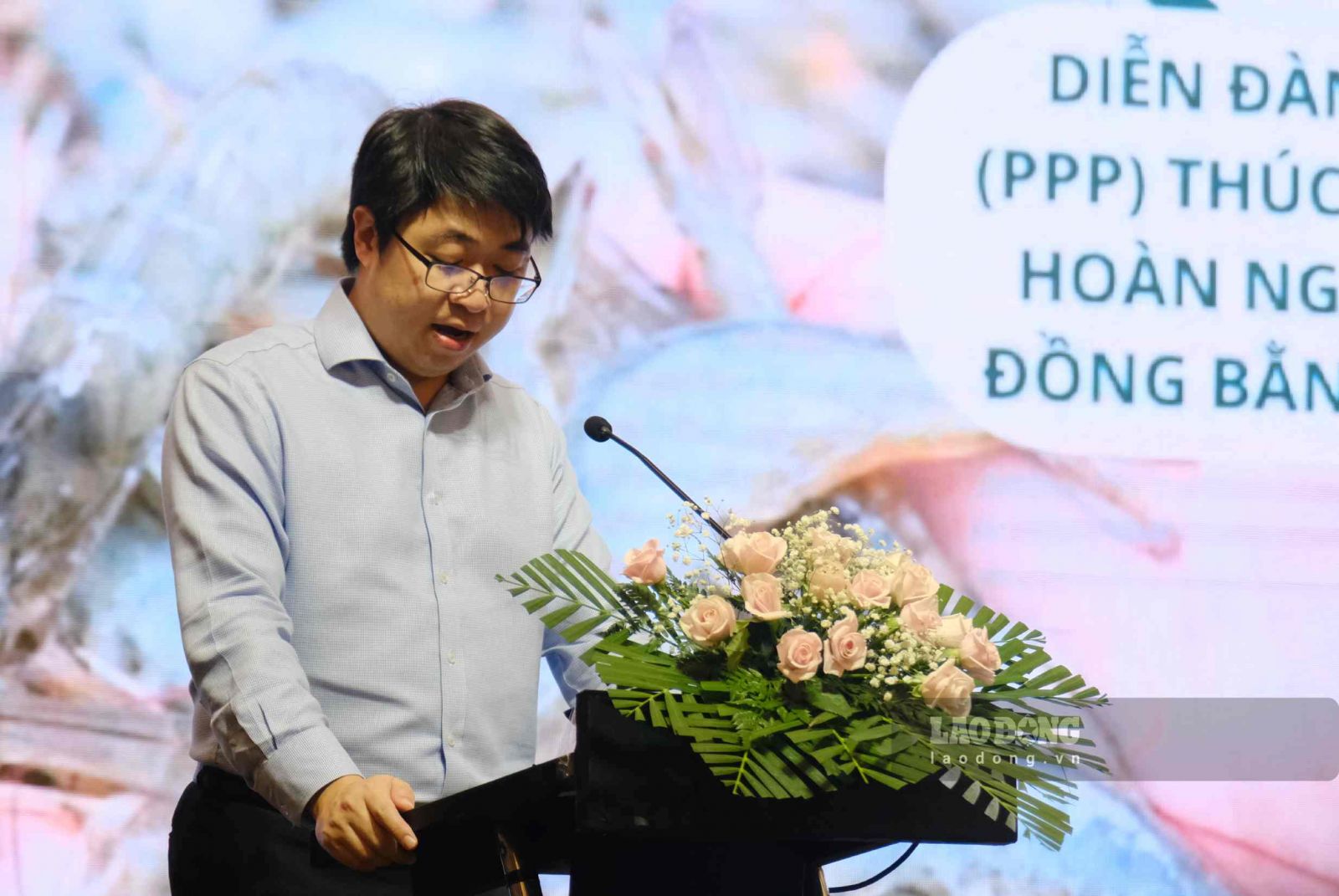
Mr. Vu Duc Dam Quang, Deputy Director General of the International Cooperation Department, speaking at the forum. Photo: My Ly (September 21)
Export markets are also placing increasing emphasis on traceability, carbon emissions, environmental responsibility and the sustainability of the entire value chain.
“These requirements point to a clear need for the shrimp sector to continue transforming its production models, improve resource efficiency, reduce emissions, and strengthen its ability to meet increasingly stringent requirements in international markets,” Mr. Quang emphasized.
Against this backdrop, Mr. Quang noted that the circular economy provides a relevant approach to the transformation of the shrimp sector, through more efficient resource use, water reuse, by-product utilization, energy efficiency, technology adoption and greater data transparency.
In practice, a number of feasible models and initiatives have already emerged. These provide a foundation for further connecting technology, finance and markets, promoting public-private partnerships, and scaling up appropriate solutions.
More than individual technologies
Mr. Ngo The Anh, Head of the Aquaculture Division, Department of Fisheries and Fisheries Surveillance, Ministry of Agriculture and Environment, noted that a circular economy in the shrimp sector is not about adopting a single technology. Rather, it involves reorganizing production systems toward greater efficiency, circularity and sustainability.
Importantly, there are still several gaps in the development of a circular economy in the shrimp sector that need to be properly identified and addressed. The first concerns institutions, policies and governance. Although a number of relevant policies and orientations are already in place, specific and detailed regulations for applying circular economy principles in the shrimp sector still need to be further developed and refined.
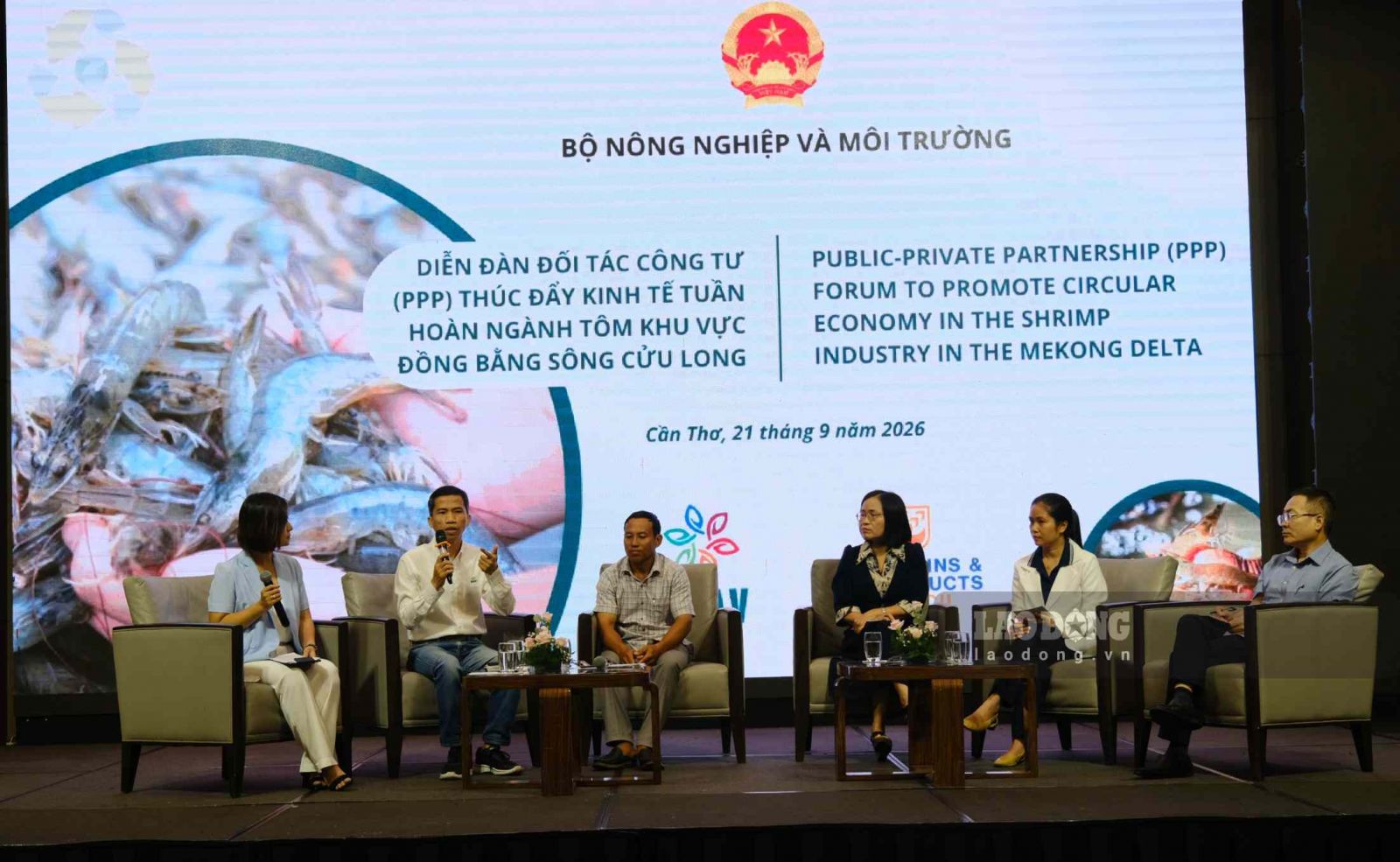
Speakers engage in dialogue and discussion at the forum. Photo: My Ly (September 21)
Other challenges include infrastructure, technology, data, financial markets, production organization and implementation capacity.
According to Mr. Ngo The Anh, addressing these gaps is a prerequisite for realizing a circular economy in the shrimp sector and moving toward green, high-value, low-emission and sustainable production.
This process requires the participation of the Government, businesses, shrimp farmers, research institutions and other relevant partners, with stakeholders sharing responsibilities, resources and benefits.
The public sector, in particular, needs to continue improving institutional and policy frameworks, supporting research and technology transfer, and strengthening implementation monitoring.
Meanwhile, the public-private partnership sector should work together to share resources and create value, while clearly defining the respective roles of government, businesses and farmers in resource mobilization and ensuring sustainability.
From an investment perspective, attention should be given not only to finance and technology, but also to governance, business model development, value-chain linkages and market expansion.