ĐỐI TÁC PHÁT TRIỂN NÔNG NGHIỆP BỀN VỮNG VIỆT NAM (PSAV)


- Giới thiệu
- Nhóm Công tác
- Thông tin về FTA
- Tài Liệu
 Điều lệ hoạt động
Viet Nam brings One Million Hectare rice project experience to the region
Taking rice sector initiative to the globe
On October 14 in Bangkok, Thailand, the International Business Council for Understanding (IBCU) and Bayer AG, in collaboration with the German Agency for International Cooperation (GIZ), organized a regional dialogue forum titled “Securing the Future of Rice - Innovation and Partnerships Advancing Food Security, Climate Resilience and Low-Carbon Rice Systems”. The forum focused on finding solutions to help Asia improve rice production efficiency while ensuring food security, strengthening resilience to climate change, and improving farmers’ livelihoods.
The event brought together nearly 200 senior representatives from government agencies, multilateral organizations, research institutes, financial and development organizations, and businesses. Participants exchanged views on how to scale up proven initiatives beyond pilot projects and turn them into practical models suited to local conditions.
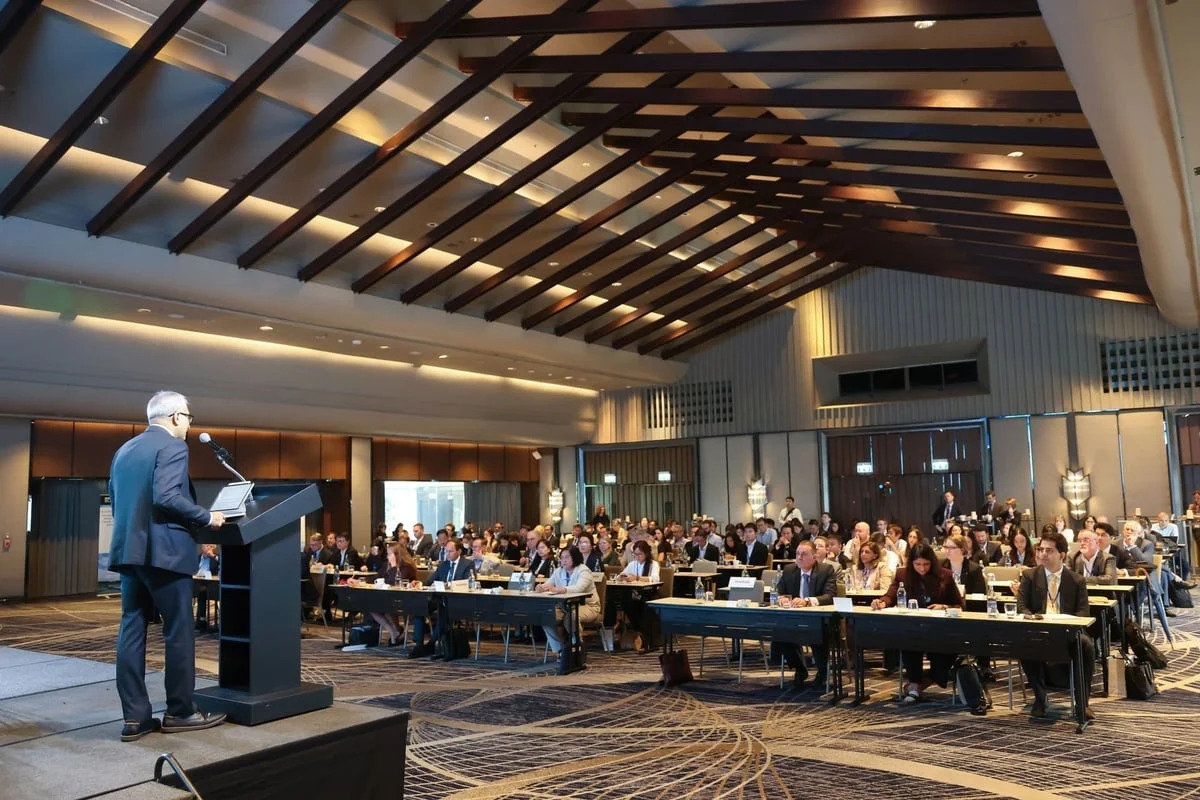
The Regional Dialogue Forum: Securing the Future of Rice - Innovation and Partnerships Advancing Food Security, Climate Resilience and Low-Carbon Rice Systems was held in Bangkok, the capital of Thailand. Photo: Hai Dang.
Transforming the rice sector is not merely a technical challenge. Many solutions are already available, including improved rice varieties, direct seeding, AWD, precision nutrient management, integrated pest management, mechanization, and by-product management. The key challenge is to integrate these solutions into a system suited to local conditions, ensuring that farmers can access and afford them and feel confident in adopting them. This is particularly important because Asia’s leading rice-producing countries have different approaches to policy, research, implementation, and incentives for farmer adoption.
Impressive figures from Viet Nam
As one of the world’s leading rice exporters, Viet Nam exported 8.06 million tonnes of rice in 2025, valued at USD 4.1 billion, ranking second globally. The Viet Namese Government places particular emphasis on sustainable rice production and, in November 2023, approved the scheme titled “Sustainable Development of One Million Hectares of High-Quality, Low-Emission Rice Cultivation Associated with Green Growth in the Mekong Delta by 2030.”
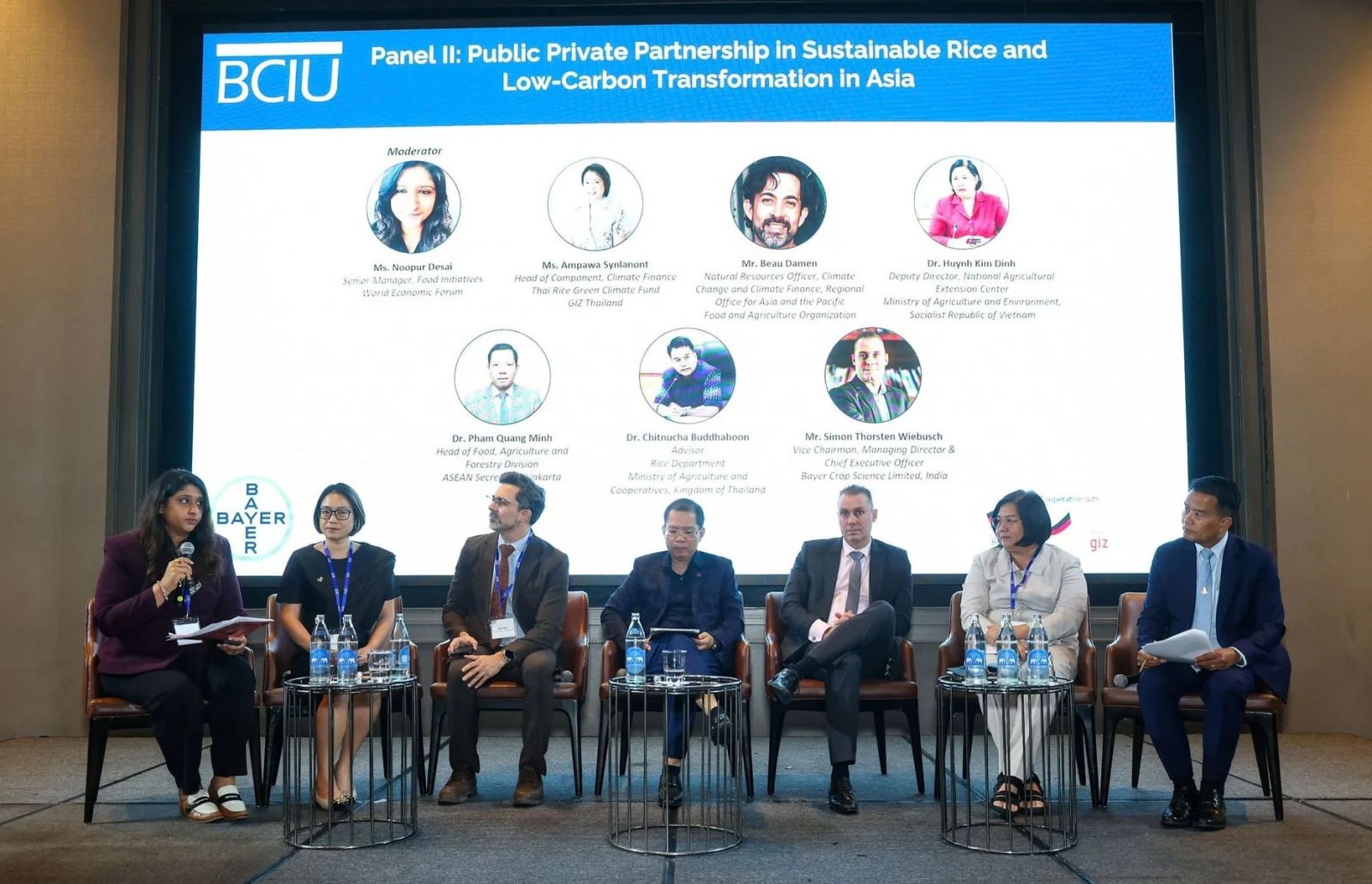
Dr. Huynh Kim Dinh, Deputy Director of the National Agricultural Extension Center (second from right), shares Vietnam’s experience in implementing the One Million Hectares Scheme. Photo: Hai Dang.
Speaking at the forum, Dr. Huynh Kim Dinh, Deputy Director of the National Agricultural Extension Center, said that after more than two years of implementation, 1,129 cooperatives and cooperative groups had joined the scheme. About 600 cooperatives and cooperative groups had signed agreements with businesses on rice production and consumption, covering more than 60-70% of the scheme's participating area. All farmers participating in the scheme are involved through cooperatives or cooperative groups.
In addition, the Viet Nam Rice Sector Association has taken initial steps to develop the “Viet Nam Green Low-Emission Rice” brand. To date, more than 18,000 hectares of rice-growing areas have been certified under the brand, representing an estimated rice output of approximately 75,060 tonnes.
Public-private partnerships for sustainable development
Viet Nam’s scheme for high-quality, low-emission rice production has also attracted active participation from private-sector partners, including Bayer. In 2023, the company launched the Bayer ForwardFarming model in Can Tho City. This was Bayer’s first ForwardFarm in ASEAN and serves as a real-world platform for generating evidence of sustainable rice production in Viet Nam.
Through demonstration models, Bayer Viet Nam works with the National Agricultural Extension Center, the Cuu Long Delta Rice Research Institute, cooperatives, and value chain partners to test integrated solutions under real-world conditions while helping build the capacity of farmers and agricultural extension officers.
The approach combines multiple solutions, including high-quality varieties, mechanized direct seeding, AWD, integrated pest management, responsible use of crop protection products, appropriate fertilizer application, UAV, mechanization, by-product management, farmer training, and market linkages. This integrated approach aims to improve both environmental performance and farmers’ economic returns.
To date, the model has reached more than 7,700 farmers and covered over 10,000 hectares. Data collected over six cropping seasons show that greenhouse gas emissions have decreased by 13.7-28.4%, water use has fallen by up to 30%, yields have increased by up to 13.5%, and farmers’ profits have risen by 13.1-74.2%. The model has also reduced seed use by 50-70% and nitrogen fertilizer use by 30-50%.